
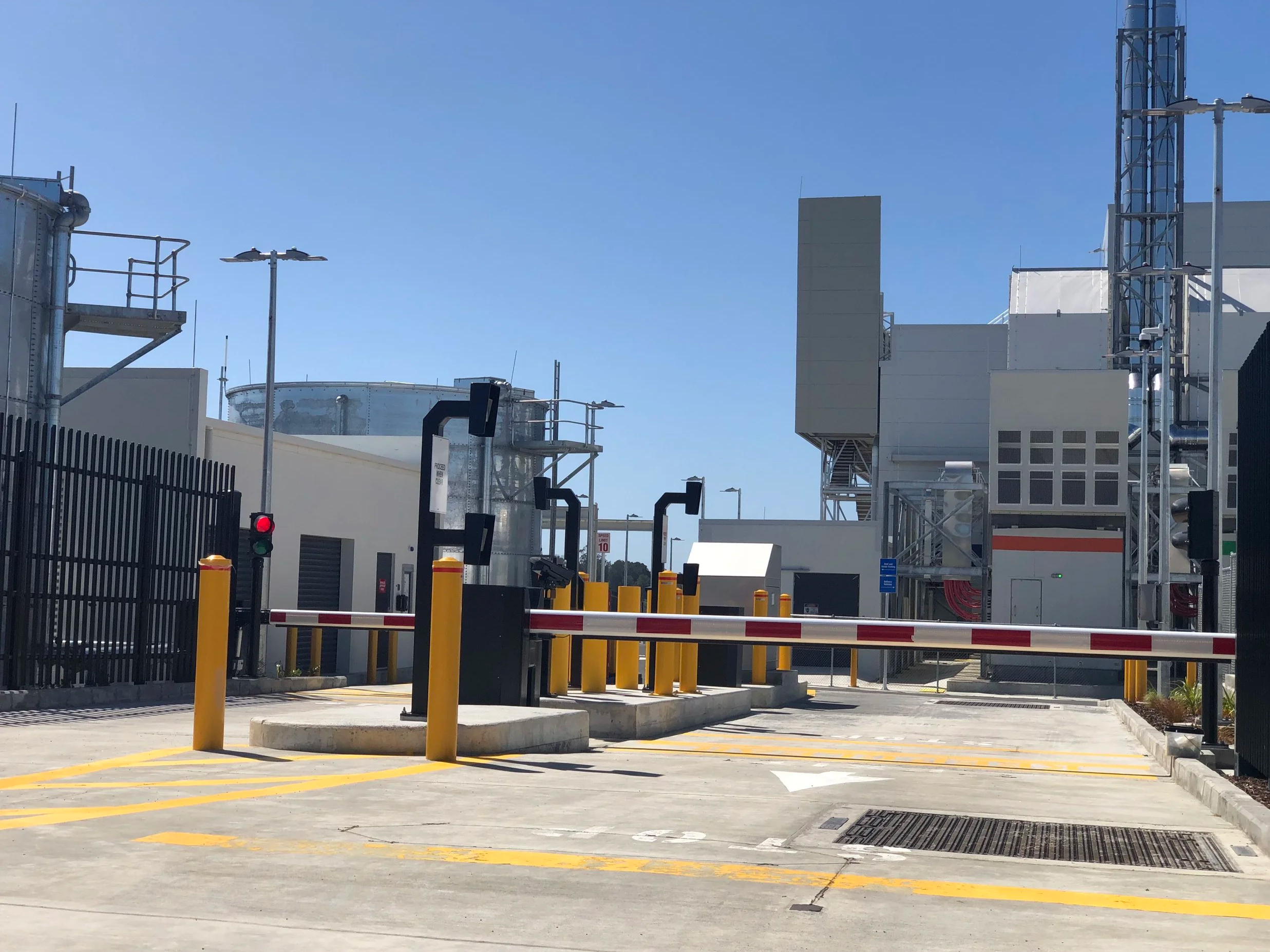
Hostile Vehicle Mitigation, often shortened to HVM, refers to the planning, design and installation of measures that reduce the risk of a vehicle being used to injure people, damage buildings or disrupt critical operations.
For specifiers, architects, consultants and asset owners, HVM is not simply a product category. It is a risk-based design approach. Once the vehicle risk is understood, the project team can determine whether a crash-rated system is required.
In simple terms, HVM is the risk being managed. Crash-rated products are often the physical solution.
A crash-rated gate, bollard, road blocker, barrier, fence or rising arm barrier has been physically tested to a recognised vehicle impact standard. These products are used where the risk assessment shows that tested vehicle impact protection is required.
Not every HVM strategy needs a crash-rated product. Some sites may be better managed through traffic design, access control, stand-off distance, landscape separation, operational controls or non-rated perimeter measures. But where a vehicle must be physically stopped, a tested crash-rated system is usually the appropriate solution.
In New Zealand, HVM and crash-rated protection are most often considered for crowded places, government facilities, critical infrastructure, high-security sites, transport environments and locations where vehicles can approach people, buildings or essential services at speed.
Is HVM mandatory in New Zealand?
There is no single rule that says every high risk or public site in New Zealand must have hostile vehicle mitigation. Whether HVM is required depends on the site, the threat profile, the type of asset being protected, the number of people exposed, and the requirements of the client, insurer, consultant, government agency or project specification.
HVM may be required or strongly recommended where:
A formal security risk assessment identifies vehicle impact as a credible risk.
The site is a crowded place with high pedestrian exposure.
The site forms part of critical infrastructure.
The project is for a government, defence, police, corrections, embassy or high-security client.
The location has a known or elevated threat profile.
A public event, transport area or civic space has exposed pedestrian zones.
The project brief requires compliance with international protective security best practice.
A consultant or security advisor has identified a need for crash-rated protection.
For lower-risk sites, crash-rated systems may not be required. However, vehicle impact risk should still be considered early in design, especially where pedestrians, public queues, staff entrances, outdoor seating, service yards or critical equipment are exposed to moving vehicles.
What types of sites should consider HVM and crash-rated protection?
HVM should be considered wherever a vehicle could be used, deliberately or accidentally, to cause harm or disruption.
Common examples include:
Stadiums, arenas and event venues
Town centres, plazas and public spaces
Airports, ports and transport hubs
Data centres and telecommunications sites
Energy, water and utility infrastructure
Government buildings and embassies
Police, defence and corrections facilities
Schools, campuses and healthcare sites with exposed pedestrian areas
Shopping centres and large car park interfaces
Industrial sites with critical plant or hazardous operations
The important question is not just “Is this a high-security site?” It is also “Can a vehicle reach the people or assets we need to protect?”
Where the answer is yes, the next question is whether the risk can be managed through site layout and operational controls, or whether a tested crash-rated system is required.
What standards apply to crash-rated HVM systems?
Specifier documents often refer to crash-test standards such as ISO 22343-1, PAS 68, IWA 14-1 and ASTM F2656/F2656M.
These standards are used to describe how a vehicle security barrier has performed under a controlled impact test. A typical rating will refer to the vehicle type or weight, impact speed, impact angle and penetration distance.
In simple terms, the rating helps answer questions such as:
What size vehicle was used in the test?
How fast was it traveling?
At what angle did it hit the barrier?
How far did the vehicle travel beyond the barrier?
Was major debris recorded?
Was the product tested as a bollard, blocker, fence, gate or another type of vehicle security barrier?
A crash rating is important, but it is not the whole specification. A product only performs as tested when it is installed in accordance with the tested configuration, including foundation design, spacing, ground conditions and installation method.
What is the difference between crash-rated and non-crash-rated products?
A crash-rated product has been physically tested against a recognised vehicle impact standard and achieved a stated performance rating.
A non-crash-rated product may help guide traffic, define a boundary, improve safety or discourage casual vehicle movement, but it should not be relied on to physically stop a hostile vehicle unless it has been designed, tested and installed for that purpose.This distinction matters. Decorative bollards, standard fencing, kerbs, planters, barriers and gates can all look substantial, but unless they have been tested and installed as a rated system, they should not be specified as crash-rated HVM protection.
What crash-rated HVM products are commonly used?
Common crash-rated HVM solutions include:
Static crash-rated bollards
Automatic or retractable bollards
Crash-rated road blockers
Crash-rated gates
Crash-rated rising arm barriers
Crash-rated fencing
Hostile vehicle-rated street furniture
Modular or temporary event barriers
Reinforced planters or landscape elements
Vehicle access control systems
The right system depends on the site. For example, a public realm project may need a solution that blends into the streetscape, while a critical infrastructure site may need a more visible and robust perimeter system.
What should specifiers consider before choosing a Crash-Rated system?
Before selecting a product, specifiers should understand the HVM risk and the operational requirements of the site. This usually includes:
The asset or people being protected
The likely vehicle approach routes
The available run-up distance
The type and size of vehicle being considered
The required protection level
The allowable penetration distance
Pedestrian and accessibility requirements
Emergency vehicle access
Daily traffic movements
Underground services and foundation constraints
Drainage, gradients and ground conditions
Architectural appearance and public realm requirements
Maintenance and whole-of-life cost
Installation staging and site disruption
Crash-rated HVM systems should be considered early. Retrofitting crash-rated gates, bollards, blockers, barriers or fencing after a site has been designed can be more expensive, more disruptive and more limited by underground services, finished surfaces, access requirements and foundation constraints.
What are common Crash-Rated HVM specification mistakes?
Common mistakes include:
Asking for “crash-rated” equipment without defining the threat or required rating.
Choosing a product based only on appearance.
Ignoring foundation requirements.
Assuming a product tested overseas will suit the local site conditions.
Forgetting emergency access, maintenance access or delivery routes.
Installing products differently from the tested configuration.
Treating HVM or crash-rated protection as a last-minute add-on.
Using non-rated equipment where a tested vehicle security systems is required.
Blocking pedestrian movement or accessibility paths.
Failing to maintain active systems such as blockers, automatic bollards or gates.
A good crash-rated HVM specification should be clear about the risk, the required performance, the site constraints and the operational needs of the people using the space.
Final advice for specifiers
HVM should always begin with the question: what are we trying to protect, and from what type of vehicle risk?
Once the risk is understood, the project team can select a system that balances security, access, safety, appearance, cost and long-term maintenance.
For New Zealand projects, the most successful HVM outcomes are usually achieved when protective security is considered early, specified clearly and installed by experienced teams who understand both the product rating and the site conditions.
PSSA HVMHub
Specifier teams wanting to explore HVM and crash-rated solutions in more detail may find the PSSA’s HVMHub useful.
It provides industry guidance on HVM product options, installer selection, terminology, downloads and links to further advice. It is a helpful reference for understanding the wider crash-rated HVM marketplace.
Where Hampden can help
At Hampden, we help project teams move from HVM risk to practical crash-rated solutions.
We work with architects, specifiers, consultants, contractors and asset owners to help identify practical HVM and crash-rated system options before a design is locked in. Early input can make a significant difference, especially where the project needs to balance security, access, public usability, aesthetics, underground services, budget and buildability.
Crash-rated HVM is rarely a one-product answer. Depending on the site, the right solution may involve a mixture of solutions such as static bollards, automatic bollards, road blockers, crash-rated gates, rising arm barriers, crash-rated fencing, vehicle access control or a more integrated perimeter protection system.
Hampden’s experience in high-security perimeter environments means we understand the importance of matching the product to the risk, the site conditions and the operational needs of the people using the space. We have supplied and installed HVM and crash-rated solutions for sensitive New Zealand sites, including Parliament buildings, vulnerable communities and data centre environments, and our wider high-security experience includes sectors such as prisons, critical infrastructure, government, defence, transport and commercial facilities.
Through our relationships with international HVM suppliers, Hampden can help project teams access a wide range of tested crash-rated vehicle mitigation systems. This means we are not limited to a single product type or manufacturer. Instead, we can help identify the solution that best suits the required performance rating, available space, foundation conditions, access requirements, budget and architectural intent.
For specifiers, this early consultation can help answer questions such as:
Does this site actually require crash-rated protection?
What level of HVM performance is appropriate?
Which product types are suitable for the available space?
Is a static solution sufficient, or is an automated HVM product required?
What are the operational requirements for day-to-day vehicle access?
How will authorised vehicles, service vehicles, emergency services and after-hours access be managed?
What control systems, access control, intercoms, safety devices or security integrations are required?
Are power, drainage, civil works, ducting and control cabling allowed for in the design and budget?
Can the system be integrated into the landscape, streetscape or building design?
What are the foundation, installation and maintenance implications?
Where automated HVM products are required, early input is especially important. Rising bollards, road blockers, automatic gates and other active vehicle mitigation systems need more than a crash rating. They also need to be considered as operational systems.
This means thinking through how the product will be powered, controlled, accessed, integrated, maintained and safely operated. Requirements such as access control, intercoms, emergency override, fire or security system integration, traffic lights, loop detectors, safety edges, drainage, ducting, control cabinets and maintenance access can all affect the design.
If these requirements are left until late in the project, they can create delays, additional costs and coordination issues between the security, electrical, civil, access control and construction teams. Early consultation helps ensure the selected HVM system is not only suitable from a protection perspective, but also practical to operate, integrate and maintain.
Talk to Hampden early About Crash-Rated HVM Solutions
If your project involves a crowded place, critical asset, public-facing building, government facility, transport environment or high-security site, Hampden can help you understand the HVM and crash-rated system options available.
Contact our team early in the design process for practical advice on product selection, performance ratings and installation considerations.

