

What is HVM?
Hostile Vehicle Mitigation (HVM) is a security strategy that uses crash-rated physical security products to protect people, buildings, assets and critical infrastructure from vehicle-borne threats and unauthorised vehicle access. Typical HVM systems include crash-rated bollards, road blockers, barrier arms, gates and fencing that have been independently tested to recognised international standards such as PAS68, ASTM F2656, ISO 22343-1 and IWA 14-1.
Hampden supplies a range of crash-rated Hostile Vehicle Mitigation (HVM) systems designed to help protect sites from vehicle-borne threats and unauthorised vehicle access. These systems are used across a wide range of applications where security, safety, and controlled vehicle access are critical considerations.
The market for Hostile Vehicle Mitigation (HVM) has emerged in response to threats against people, buildings, and critical infrastructure. Initially driven by the risk of Vehicle-Borne Improvised Explosive Devices (VBIEDs), the sector has evolved to address the growing use of vehicles as weapons (VAW) in attacks on public spaces and high-profile assets.
Products Used:


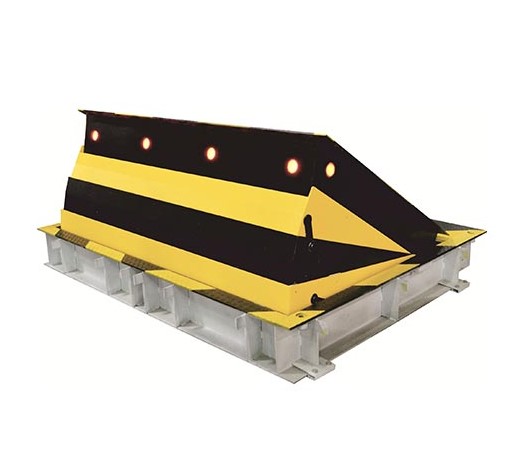

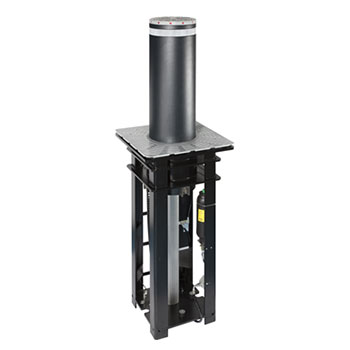
HVM Design Insight
Not all crash-rates barriers provide the same level of protection. HVM systems are tested against specific vehicle weights and impact speeds, meaning two similar-looking barriers can perform very differently. For example, depending on the model, some systems are certified to stop a 7,200kg truck travelling at 48kmph (30MPH), while others are tested at 64kph (40MPH) or 80kph (50MPH). Understanding the required threat profile and crash rating is essential when specifying an effective Hostile Vehicle Mitigation (HVM) solution.
To learn more about Hostile Vehicle Mitigation (HVM) and when crash-rated systems are required in New Zealand, visit the article below.
What Is HVM And When Are Crash-Rated Systems Required In New Zealand?
HVM Project Insight
Hampden has delivered Hostile Vehicle Mitigation (HVM) solutions for a range of critical infrastructure and high-security environments across New Zealand, including data centres, and vulnerable community sites. This experience helps project teams navigate security requirements, select appropriate crash-rated systems, and implement solutions that balance protection, compliance, and day-to-day operations.
See how Hampden delivered New Zealand’s first PAS 68 crash-rated cantilever gate in the article below.
NZ’s First PAS68 Crash Rated Cantilever Gate - Imported & Installed By Hampden
FAQ: Hostile Vehicle Mitigation (HVM) in New Zealand
-
No. HVM is often associated with deliberate vehicle attacks, but it can also help reduce risks from accidental vehicle impact, unauthorised vehicle entry, ram-raids and disruption to essential services.
-
No. Not every public space requires a crash-rated HVM system. Some sites may need tested vehicle security barriers, while others may be better suited to traffic management, kerb design, landscape separation, street furniture, access control, operational procedures or a combination of measures.
The right approach should be based on the site-specific risk, the people or assets being protected, the available space, vehicle approach routes, operational requirements and the level of protection required.
-
Only where they are suitable for the identified risk.
If crash-rated protection is required, the selected system should be tested and rated for the relevant vehicle impact scenario.
Standard gates, fencing, bollards, barriers, planters, street furniture or architectural features should not be assumed to provide hostile vehicle mitigation unless they have been specifically designed, tested and installed for that purpose.
HVM can include many different product types, including crash-rated bollards, road blockers, gates, rising arm barriers, fencing, street furniture and integrated perimeter systems. The key is selecting the right solution for the risk, the site conditions and the way the site needs to operate.
-
PAS 68 is an older UK vehicle impact test standard that is still commonly referenced in product documentation. Many existing products have PAS 68 ratings, but specifiers should understand how that rating relates to the current project requirement.
-
ISO 22343-1 is a current international standard for vehicle security barrier impact testing. It provides a common way to describe the performance of tested HVM products.
-
ASTM F2656/F2656M is a US vehicle barrier crash-test standard. It may appear in New Zealand specifications where international products, overseas consultants or global security standards are involved.
-
A crash rating usually tells you the vehicle type or weight, impact speed, impact angle and penetration distance achieved during testing. This helps match a barrier to a site-specific risk.
-
Yes. Hostile Vehicle Mitigation (HVM) systems can be aesthetically customised to suit their surroundings, including colours, finishes, dimensions, and gate infill designs, provided these changes remain within the manufacturer's approved limits. However, the structural elements of crash-rated HVM products cannot be altered, as this may affect their ability to stop a vehicle and could invalidate the certified crash rating. Any structural modifications may also require additional engineering assessment and re-testing.
Every site presents different operational, security, and spatial requirements. Hampden works with architects, consultants, contractors, and end users to source Hostile Vehicle Mitigation (HVM) solutions that integrate with site operations, access control requirements, and the required crash rating. This collaborative approach helps ensure compliance while maintaining safe and efficient vehicle and pedestrian access.
-
As early as possible. The best time to consider HVM is during site planning, concept design or early developed design. This gives the project team more options and reduces the risk of costly retrofitting.
-
Crash rated barriers are almost always not a standalone solution- it is one layer in the site’s high-security access and protection strategy.
The barrier, gate, bollard, blocker or fence provides the physical stopping point. But the full system may also rely on controlled access, fencing, surveillance, lighting, signage, intercoms, alarms, traffic management, safety systems and emergency override procedures.
Early coordination is especially important where crash-rated equipment is automated. Automated gates, bollards, blockers and barriers may require any combination of power, controls, ducting, drainage, access control integration, safety devices, traffic lights, loop detectors, intercoms, fire-system interfaces, manual release and emergency override planning.
For specifiers, the important point is this: HVM solutions must be coordinated early with the civil, electrical, security and operational design. If added late, integration becomes harder, slower and more expensive.
-
Depending on the project, the team may include the client, architect, security consultant, civil engineer, structural engineer, traffic engineer, landscape architect, and the approved crash-rated barrier installer (such as Hampden).
-
Currently, crash-rated HVM equipment used in New Zealand is sourced from specialist international manufacturers - on an as required basis, and often, made to order. While New Zealand has local manufacturers of bollards, barriers, gates, fencing and security products like Hampden Ltd, crash-rated HVM is a highly specialised category that requires physical impact testing to recognised standards.
-
Hampden has proven experience delivering crash-rated Hostile Vehicle Mitigation (HVM) solutions across New Zealand. We have successfully supplied and installed HVM systems for data centres, correctional facilities, government infrastructure, and other critical assets, providing end-to-end support from product selection and site layout through to compliance and installation.
Our team works closely with clients, consultants, and contractors to ensure each solution is fit for purpose, meets project requirements, and performs as intended. Through partnerships with leading international manufacturers, Hampden provides New Zealand project teams with access to a comprehensive range of independently tested, crash-rated vehicle security systems, including bollards, road blockers, gates, barriers, fencing, and other perimeter protection solutions.

Need a high security Solution? Call us today!

